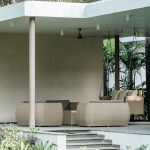
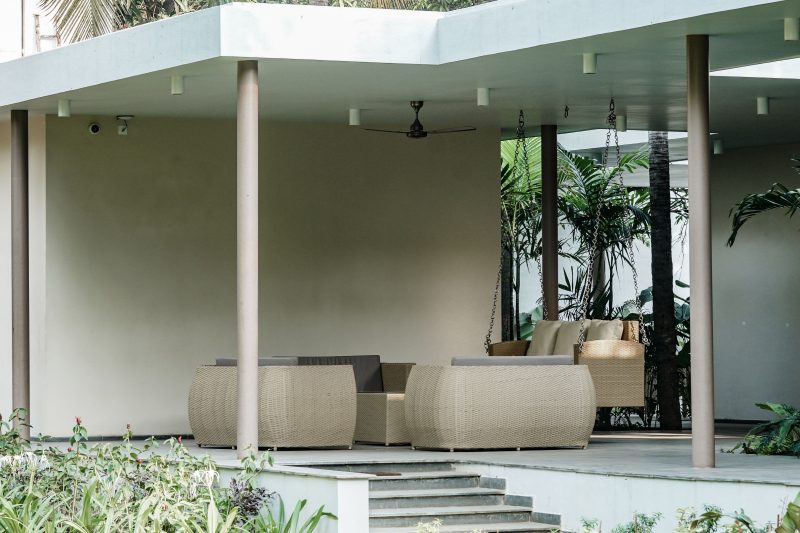
Outdoor furniture used to be treated as the final layer of a garden: add a table, scatter a few chairs, and the planting does the real design work. That relationship is changing. Furniture now helps set the geometry of a space, control how people move through it and decide whether a garden feels architectural, informal, quiet or social.
The material is central to that change. A powder-coated aluminium chair gives a very different visual weight from a timber bench. Woven fibre softens a hard terrace, while a composite surface can create continuity between decking, planters and seating. This is why composite outdoor furniture is attracting attention: not because it makes every other material obsolete, but because it offers designers another way to combine a consistent appearance with lower routine maintenance.
The most useful question is no longer “Which material lasts longest?” It is “Which material will age well in this particular garden, and will its care demands match the way the space is used?”
Table of Contents
- Why material is now part of the garden plan
- Wood: warmth, weathering and visible change
- Metal: thin profiles and structural clarity
- Wicker and rattan: texture without visual heaviness
- Composites and recycled polymers
- Outdoor textiles are doing more than adding colour
- A practical material comparison
- How to choose for a real garden
- Frequently Asked Questions
Why material is now part of the garden plan
Garden furniture is increasingly being designed with the same attention given to paving, lighting and boundary treatments. It can define an outdoor room without building a wall. A long bench can turn the edge of a planting bed into a destination; a low lounge arrangement can slow the pace of a large terrace; a slim dining set can preserve sightlines across a small courtyard.
Material affects that composition in several ways:
- Reflectance: pale metal and light textiles bounce daylight, while dark finishes visually recede.
- Temperature: exposed metal can feel hot in direct sun, making shade and cushion choice part of the design.
- Sound: hollow or hard surfaces can make a terrace feel sharper, while textiles and woven surfaces absorb some of that hardness.
- Movement: lightweight chairs are useful in flexible spaces, but very light pieces may need protection in exposed or windy gardens.
- Aging: some materials become more characterful with time, while others are expected to retain a near-new finish.
The University of Florida’s gardening guidance makes a similar practical point: outdoor furniture should be selected for both weather resistance and its ability to express the style of the landscape. That sounds obvious, but it changes the order of decisions. Instead of choosing a shape first and hoping the material works, the better approach is to begin with exposure, maintenance and the garden’s visual language.
Wood: warmth, weathering and visible change
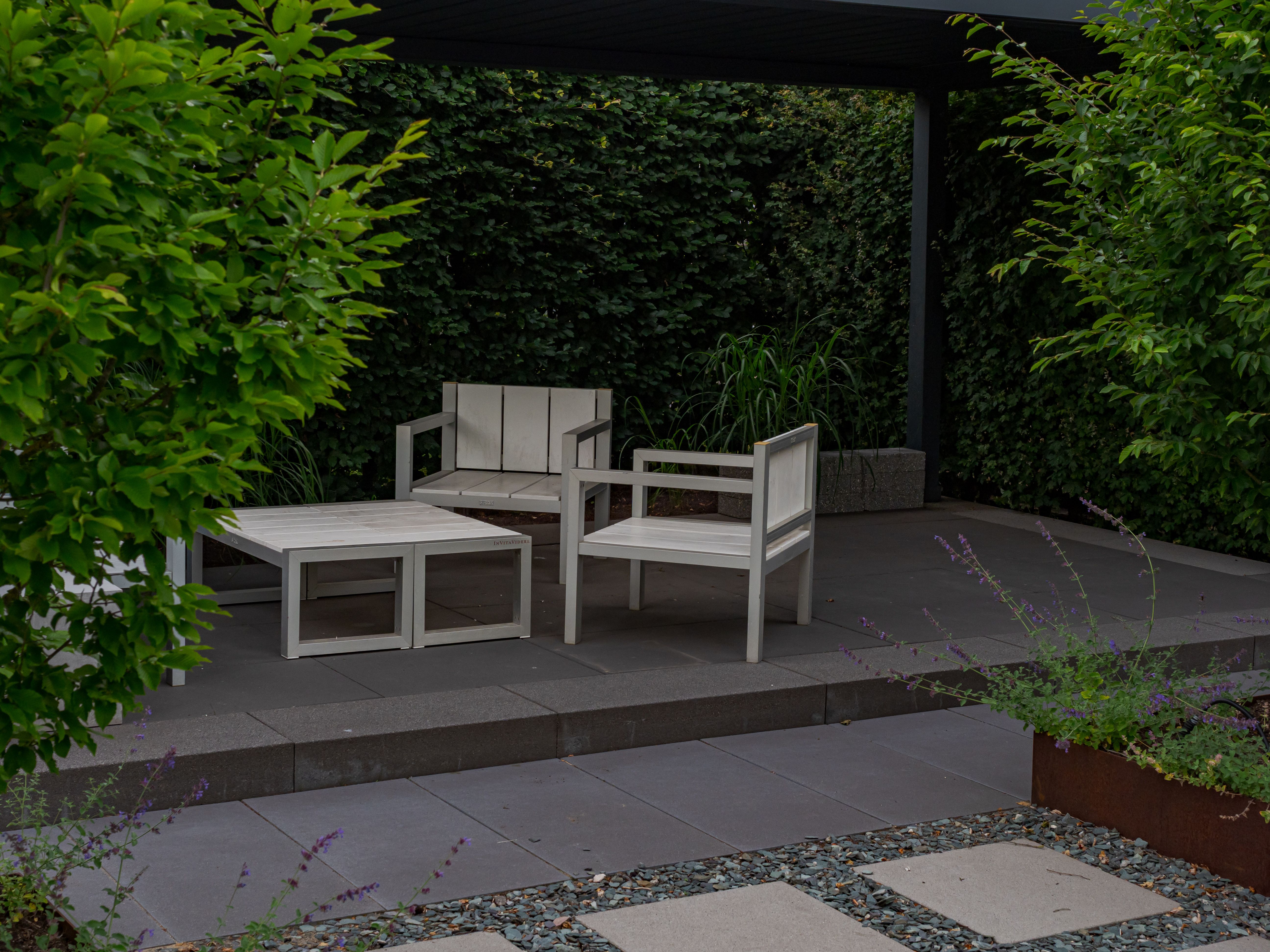
Wood remains difficult to replace when a garden needs warmth. It connects a hard terrace to planting, looks comfortable before anyone sits down and can make contemporary detailing feel less clinical. Timber also changes visibly, which is either its greatest strength or its most frustrating weakness.
Outdoor wood is affected by two separate processes: weathering and decay. The U.S. Forest Service explains that sunlight, wind, debris and moisture gradually alter the surface, while persistent moisture creates conditions for fungal decay. Its guidance notes that, on vertical exposures, unfinished softwood can lose roughly 6 mm of surface over a century. That is not a service-life promise for furniture; it is a useful reminder that surface change and structural failure are not the same thing.
Wood can therefore be specified in two very different ways:
- As a finish-led material: choose a coating or stain and accept regular cleaning, inspection and renewal.
- As a patina-led material: allow the surface to silver or soften, while still keeping joints, end grain and areas that trap water protected.
I prefer the second approach where the surrounding garden is naturalistic. A piece that is expected to age can sit comfortably beside weathered stone, bark and ornamental grasses. In a formal courtyard, however, untreated timber may look neglected rather than deliberate unless the rest of the palette supports it.
Whatever the visual intention, wood should not sit in standing water. Good drainage, raised feet, breathable covers and attention to end grain often matter more than applying another coat of product after problems have already appeared.
Metal: thin profiles and structural clarity
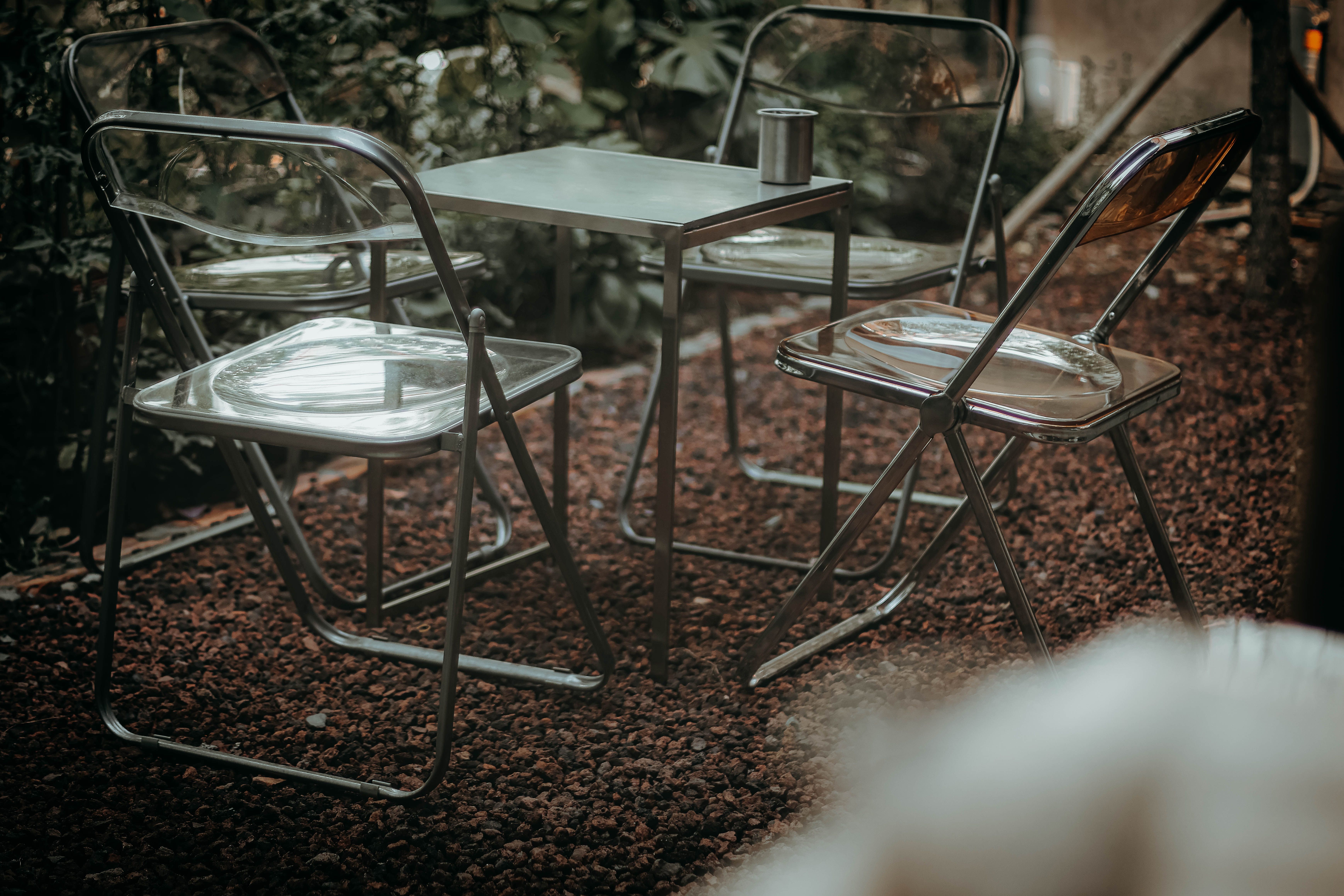
Metal has changed the silhouette of outdoor furniture. Aluminium allows broad frames and slim sections without the visual mass of heavy timber, while steel can provide a more grounded, substantial presence. The result is furniture that reads less like a collection of garden objects and more like part of the terrace architecture.
Aluminium is particularly useful where furniture needs to be moved often. It does not rust in the same way ferrous steel does, but lightweight construction can become a disadvantage on exposed sites. A chair that is easy to carry into the shade is also easy for a strong gust to move. Weight, anchoring and storage should be considered together.
Steel brings its own trade-off. A sound protective finish can make it highly practical, yet chips, scratches and poorly protected joints can create routes for corrosion. The answer is not to avoid steel; it is to inspect the places where water collects and repair damaged finishes before corrosion spreads.
Metal also exposes a common design mistake: choosing a frame for its appearance while ignoring touch points. Armrests, tabletops and seat surfaces need shade, cushions or a finish appropriate to the local climate. A beautiful chair that cannot be used comfortably at midday is not a successful outdoor chair.
Wicker and rattan: texture without visual heaviness
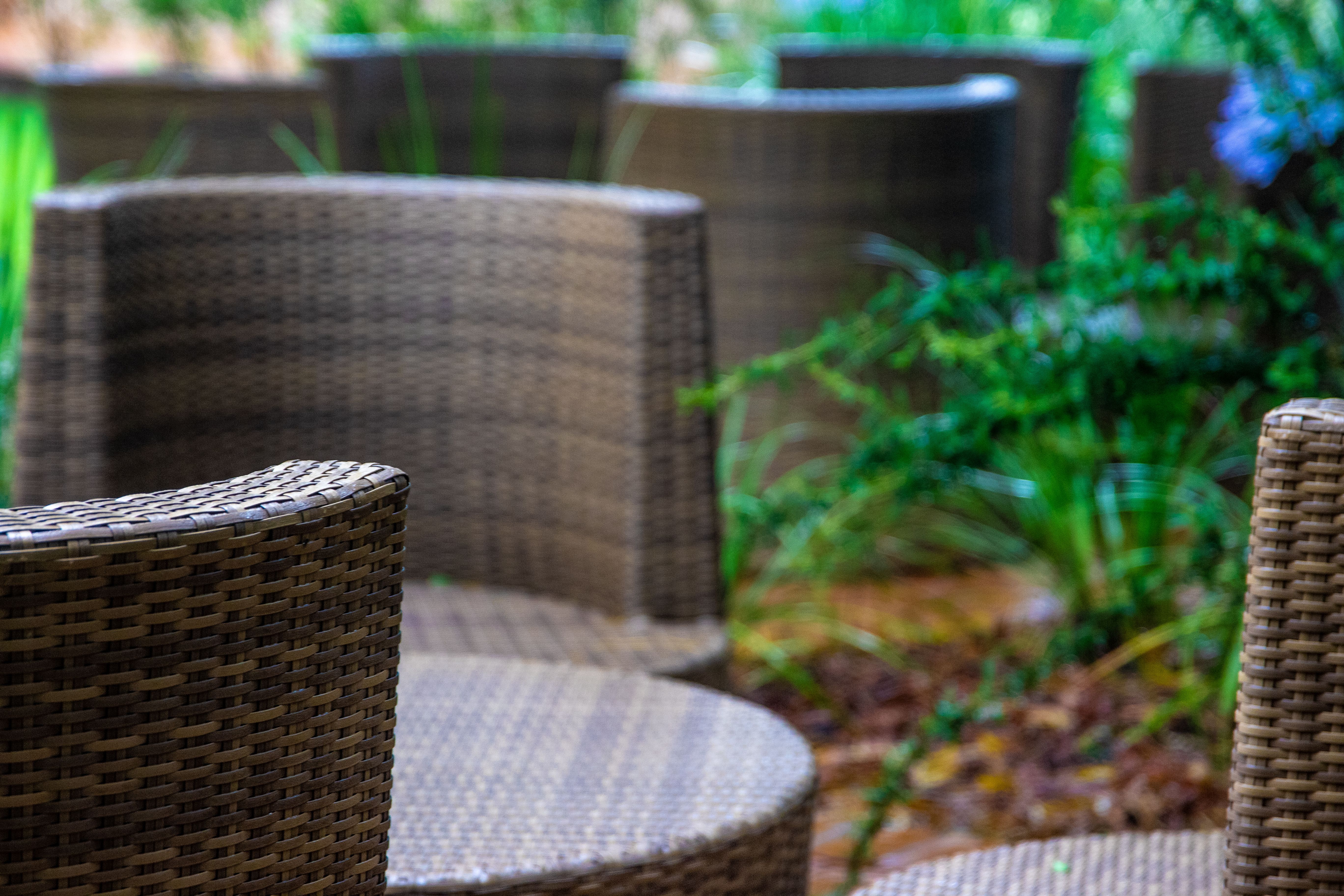
Woven furniture earns its place through texture. It breaks up expanses of paving and introduces a smaller, more tactile rhythm than a solid panel. In a restrained garden, that texture can prevent a dark terrace from feeling austere; in a lush garden, it can echo the density of stems and leaves.
“Wicker” describes a method or visual language rather than one single material. Natural rattan and other plant fibres behave differently from synthetic outdoor weaves, so the specification matters. The University of Florida recommends choosing outdoor fabrics and furniture materials that tolerate moisture, humidity and drying conditions rather than assuming that an indoor-style weave will perform outside.
Synthetic weave is often selected for exposure, but it is not maintenance-free in the broadest sense. Dirt settles in the weave, cushions can hold moisture against the frame and freezing conditions may make some plastic rattan products brittle. A woven chair lasts longer when it can dry properly and when its frame is not left standing in pooled water.
The design benefit is worth preserving: woven backs and sides can make a large seating arrangement appear lighter than an equivalent solid form. That is especially useful around small patios where the furniture must feel generous without visually closing the space.
Composites and recycled polymers
Composite materials are changing the conversation because they can separate appearance from some of the maintenance behaviours associated with natural timber. Wood-plastic composites, for example, combine wood fibre with a polymer matrix. Their performance depends heavily on the formulation, manufacturing quality, moisture exposure and UV stability, so “composite” should never be treated as a complete specification.
A 2024 review in Polymers describes the attraction clearly: composites can offer dimensional stability, resistance to pests and design flexibility. It also identifies the limitations, including water absorption in some natural-fibre composites and UV-driven colour change, surface cracking or loss of mechanical properties when protection is inadequate.
That balance makes composite furniture most interesting when it is used thoughtfully:
- Choose it where a consistent colour or board profile helps connect furniture to decking and architectural elements.
- Ask what fibres and polymers are used, rather than relying on a generic sustainability claim.
- Check how the product can be repaired, separated or recycled at the end of its useful life.
- Look at the underside and fixing details, because trapped moisture can defeat a weather-resistant surface.
The Nordic Swan criteria for outdoor furniture illustrate where the market is heading. Their requirements address recycled content, traceable wood, chemical restrictions, repairability and separation of materials. Those are more meaningful sustainability questions than whether a product is described as “eco” in a catalogue.
Outdoor textiles are doing more than adding colour
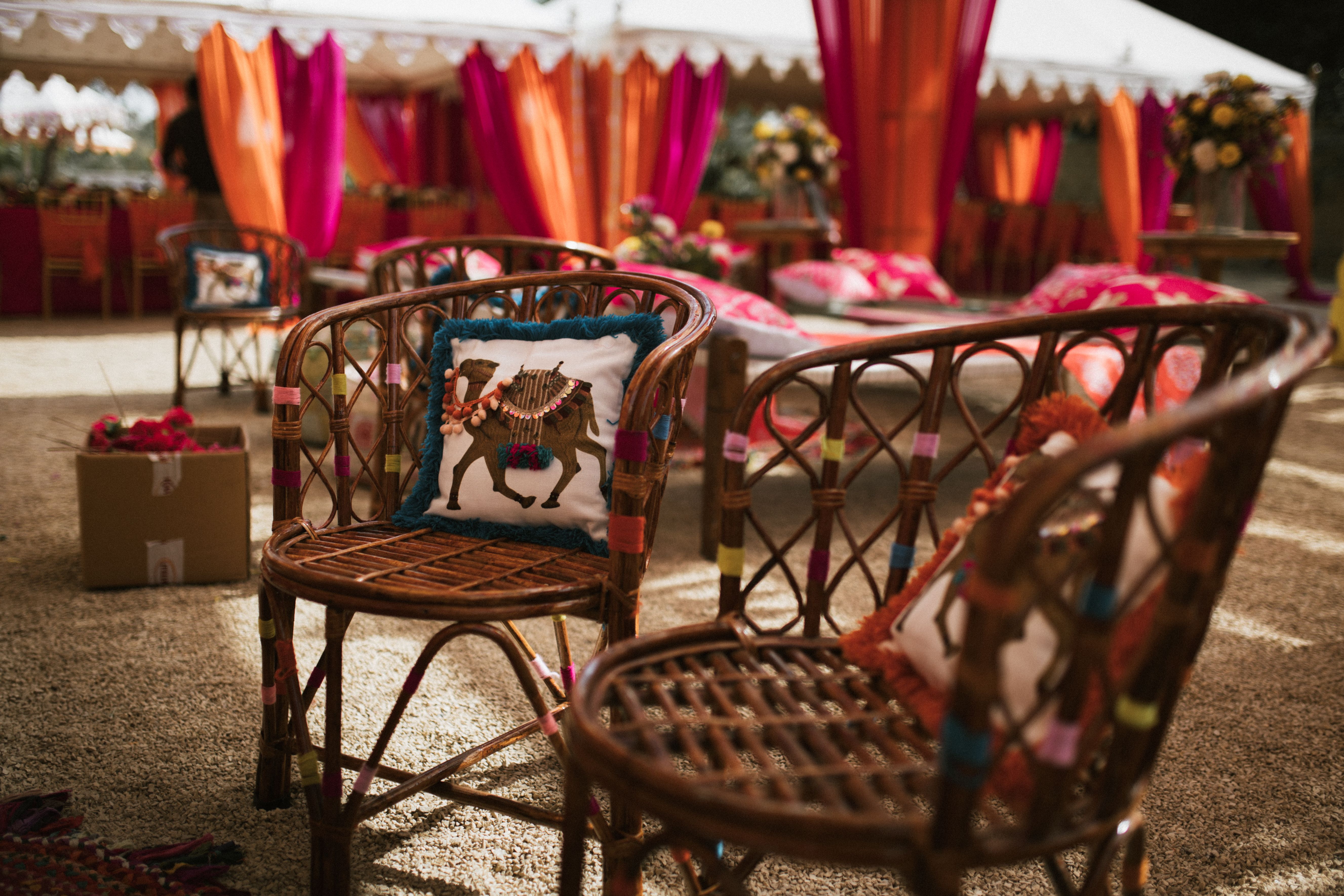
Cushions and textiles used to be seasonal decoration. They are now part of the comfort and climate strategy of an outdoor room. A textile layer can make metal usable in strong sun, soften the acoustics of a paved courtyard and give one set of furniture several identities through the year.
Outdoor fabric still has to deal with moisture, mildew, staining and ultraviolet exposure. Breathable covers, quick-draining cushion interiors and removable covers are practical details with design consequences: they allow colour and softness without turning the furniture into a permanent damp store.
Colour should be chosen with the garden’s changing background in mind. A bright cushion may work against evergreen planting in spring and become visually loud when late-summer flowers arrive. Neutral upholstery is not automatically safer; a muted base with one replaceable accent colour can be more adaptable than a fully neutral arrangement.
A practical material comparison
The table below is a design-oriented guide rather than a ranking. The important point is that no material wins every category.
| Material family | Visual contribution | Typical pressure point | Best design use |
|---|---|---|---|
| Natural wood | Warm, tactile, visually connected to planting | Moisture, UV weathering and finish maintenance | Benches, dining tables and gardens built around natural patina |
| Aluminium | Light, precise and architectural | Heat, wind movement and finish damage | Contemporary terraces and furniture that must be moved |
| Steel | Solid, grounded and strongly graphic | Corrosion at chips, joints and water traps | Permanent-feeling dining sets and robust frames |
| Woven fibre | Textured, relaxed and visually soft | Moisture held in the weave or cushions | Lounge settings that need comfort without heavy forms |
| Composite | Consistent, coordinated and adaptable | Unclear composition, UV ageing and end-of-life disposal | Integrated schemes linking furniture with decks or screens |
Source note: material behaviour and care considerations were checked against the U.S. Forest Service guidance on outdoor wood, the University of Florida’s outdoor-living guidance and the Nordic Swan outdoor-furniture criteria, retrieved in October 2026.
How to choose for a real garden
Start with the exposure rather than the colour. A shaded courtyard has different priorities from a roof terrace, a coastal garden or a lawn that receives strong afternoon sun. Then decide how much visible change you are comfortable with.
- For a low-maintenance scheme: consider aluminium, well-specified synthetic weave or a composite, but inspect the product’s fixings and recycling information.
- For a naturalistic scheme: use timber or woven materials whose ageing complements the planting rather than trying to keep every surface pristine.
- For a small urban terrace: prioritise slim profiles, stackability and pieces that can be moved into shade or storage.
- For a permanent dining area: give more weight to stability, cleanability and comfortable touch surfaces than to the lightest possible frame.
- For a long-term purchase: ask whether covers, cushions, slats and hardware can be replaced independently.
My strongest recommendation is to combine materials instead of forcing one material to do everything. A timber table with powder-coated metal chairs, or a composite bench softened by removable textiles, usually produces a more layered garden than a matching suite. It also makes future repairs less disruptive because one worn component does not define the whole space.
Frequently Asked Questions
Designing for the next season, not just this one
The most convincing modern gardens do not hide the fact that materials age. They give weathering somewhere to belong. Timber can echo the bark of nearby trees, metal can sharpen a geometric layout, woven surfaces can make paving feel inhabited and textiles can change the mood without replacing the furniture.
That is the real shift: outdoor furniture is becoming part of the garden’s long-term composition. The best choice is not the material with the loudest promise of permanence, but the one whose performance, maintenance and eventual ageing make sense for the space around it.